Open the photos on your phone and scroll back through the last year.
There are thousands of them. First foods. The bath. The morning someone fell asleep on your chest and you didn't move for an hour. Every one of them taken by you.
Now count the ones you're actually in.
You're not imagining it
In a 2026 survey of more than 500 mothers by the photo company CEWE, 58% said they're almost never in their family's photos. Almost nine in ten said they're the one who takes them. And 44% said they avoid being photographed because of how they feel about the way they look.
That survey was in the UK, but I'd be surprised if Ontario were any different. The same story turns up in every parenting forum: a mother who realises she has two photos of herself with her baby from the whole first year, and one of them is blurry.
I know it from the inside, too. In the first year of my son's life I was permanently behind the camera, and there's almost no record of me holding him. It's the reason I photograph mothers now.

It's not vanity and it's not an accident. It's three ordinary things.
You're the one who notices. Mothers tend to be the family's memory-keepers. You're the one who sees the moment and reaches for the phone, so you're the one who isn't in it.
Nobody else thinks to take one. Partners love you. They just don't always think, "she should be in this." And asking feels awkward.
You don't love how you look right now. You're tired, your body has changed, your hair hasn't been cut in months. So when someone does point a camera at you, you step out of the frame. "Next year," you think. "When I feel more like myself."
Why it matters more than you think
Here's the thing I keep coming back to. Your children won't remember this year. You're the only one who will, and memory fades much faster than we expect.
One day they'll want to know what it was like when they were small. They'll look for you in the photographs. What they'll want to see isn't the perfect version of you. It's you, exactly as you were: the way you held them, your hands, your face at this age, the way you looked at them when you thought nobody was watching.
Nobody looks at an old photograph of their mother and thinks she should have lost five pounds first.
What a motherhood session actually is
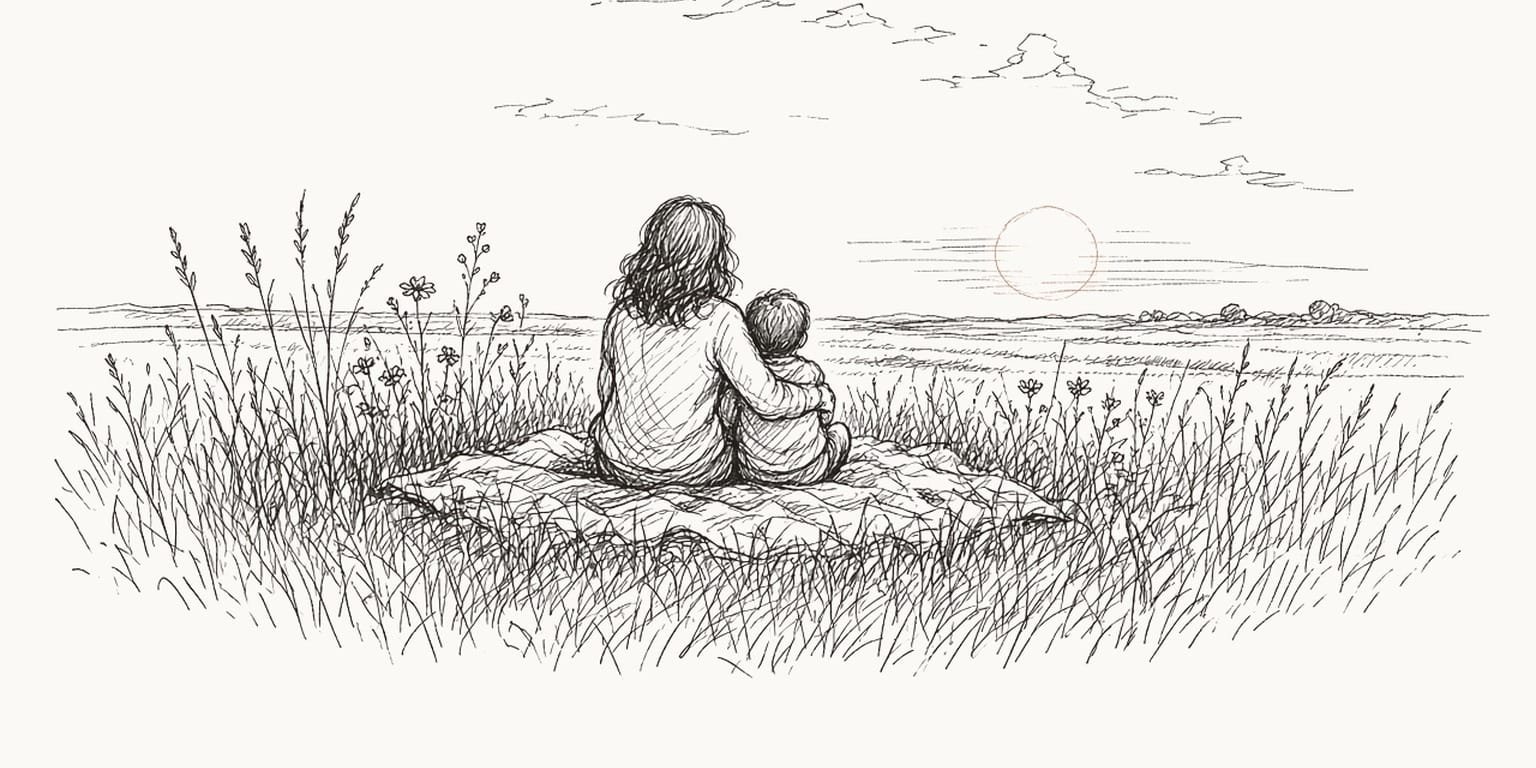
It's a session that's about you and your child. Not the whole family lined up, not a studio portrait. Just the two of you, or you and your children, together in good light.
This summer I photographed Alina and her son Timofii in Dickson Park in Cambridge. She had hundreds of photos of him and almost none of the two of them together. For the first ten minutes she was stiff and self-conscious. Then Timofii started practising his first steps holding her fingers, tumbled into her lap and laughed until she did too, and she forgot I was there. My favourite frame is her standing in the last of the light with him curled in her arms, her whole attention on him. The full session is here.
And at a horse ranch near Waterdown, I photographed Nataliya with her son Matthew, a week before his first birthday. She wanted horses in the photographs because he loves animals. He reached through the fence toward a chestnut mare, and the photo she printed is her cheek against his hair in the afternoon sun, a horse soft at the edge of the frame. That session is here.
Neither of them posed. That's the point.
"But I hate having my photo taken"
You're in the majority. Almost every mother I photograph says some version of this when she first writes to me. Almost every one ends up printing a photo.
A few things make it easier:
- You won't be looking at the camera most of the time. You'll be looking at your child, which is a much easier thing to do, and it's what makes the photos feel like you.
- I'll tell you where to stand and what to do. Walk with them. Pick them up. Tell them a secret. You don't need to know how to pose.
- I don't make you look like someone else. I edit every image by hand, with warm, soft colour and the shadows left in. You'll look like yourself on a good evening.
- The light does a lot of the work. The hour before sunset is the most forgiving light there is.

You don't need to lose the weight first. You don't need to wait until your hair grows out, or the house is tidy, or the baby sleeps through the night.
If you're reading this and quietly thinking "next year," I'd gently push back. Next year they'll be different. The shoes that fit last month already don't.
If you're the partner reading this
A motherhood session makes a very good gift, for a birthday, Mother's Day or no reason at all. Gift certificates don't expire. And the gift isn't really the photographs. It's being seen.
Frequently asked questions
What is a motherhood photoshoot? A session focused on a mother and her children together, rather than the whole family or the children alone. Usually outdoors in natural light, relaxed and unposed.
What's the best age for a mommy and me session? Any age. Babies of 6 to 12 months are lovely because they're sitting up and still happy to be held. Toddlers bring movement and laughter. Older children can hug you back properly.
Can my partner join for a few photos? Of course. Many sessions end up part motherhood, part family.
How long is a motherhood session? Thirty minutes ($175) is often enough for one mother and one small child. An hour ($300) gives more variety and time to relax.